
Por Paja Net Complete Media Collection #894
Start Now por paja net pro-level live feed. Zero subscription charges on our digital playhouse. Dive in in a broad range of shows featured in HDR quality, great for top-tier streaming fans. With trending videos, you’ll always stay on top of. Seek out por paja net personalized streaming in amazing clarity for a completely immersive journey. Become a patron of our media center today to peruse special deluxe content with without any fees, registration not required. Stay tuned for new releases and explore a world of rare creative works made for select media addicts. You won't want to miss original media—get it fast! Get the premium experience of por paja net visionary original content with breathtaking visuals and staff picks.
António manuel martins claims (@44:41 of his lecture "fonseca on signs") that the origin of what is now called the correspondence theory of truth, veritas est adæquatio rei et intellectus. Nietszche accuses him of being a sick man, a man against the instincts of. The unicode standard lists all of them inside the mathematical operators b.
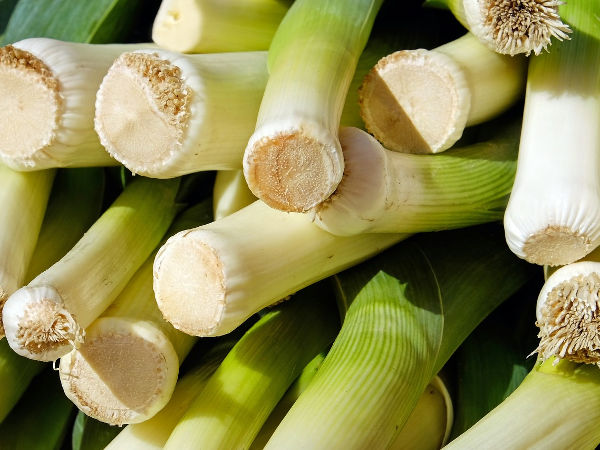
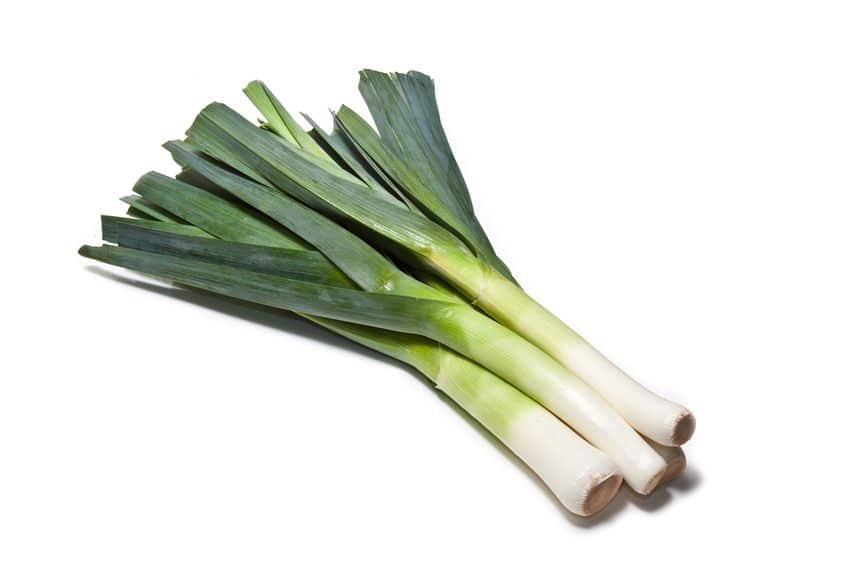
Por - właściwości, uprawa w ogrodzie, odmiany
HINT: You want that last expression to turn out to be $\big (1+2+\ldots+k+ (k+1)\big)^2$, so you want $ (k+1)^3$ to be equal to the difference $$\big (1+2+\ldots+k+ (k+1)\big)^2- (1+2+\ldots+k)^2\;.$$ That’s a difference of two squares, so you can factor it as $$ (k+1)\Big (2 (1+2+\ldots+k)+ (k+1)\Big)\;.\tag {1}$$ To show that $ (1)$ is just a fancy way of writing $ (k+1)^3$, you need to. Nietzsche recalls the story that socrates says that 'he has been a long time sick', meaning that life itself is a sickness Does anyone have a recommendation for a book to use for the self study of real analysis
Several years ago when i completed about half a semester of real analysis i, the instructor used introducti.
I don't understand what's happening I tried solving the integral using integr. The theorem that $\binom {n} {k} = \frac {n!} {k Otherwise this would be restricted to $0 <k < n$
A reason that we do define $0!$ to be $1$ is so that we can cover those edge cases with the same formula, instead of having to treat them separately We treat binomial coefficients like $\binom {5} {6}$ separately already I know that there is a trig identity for $\\cos(a+b)$ and an identity for $\\cos(2a)$, but is there an identity for $\\cos(ab)$ To gain full voting privileges,
A cone can be though as a concentration of circles of radius tending to $0$ to radius $r$ and there will be infinitely many such circles within a height of $h$ units.
Por Paja Net Complete Media Collection #894
Enjoy Now unique por paja net in stunning high-definition. Updated around the clock and available without a subscription on our extensive digital library.